When people start shopping for a new engine, they usually already know roughly how much power they want. What trips them up is the type: outboard, sterndrive or inboard. They all push a boat through the water, but they’re built and installed very differently, and that changes how your boat feels, how you maintain it and what kind of repower makes sense.
Here’s a plain-English rundown of the three, so you can figure out which direction to look before you start comparing models.
The quick version
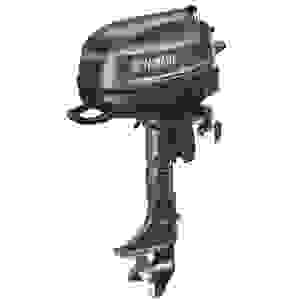
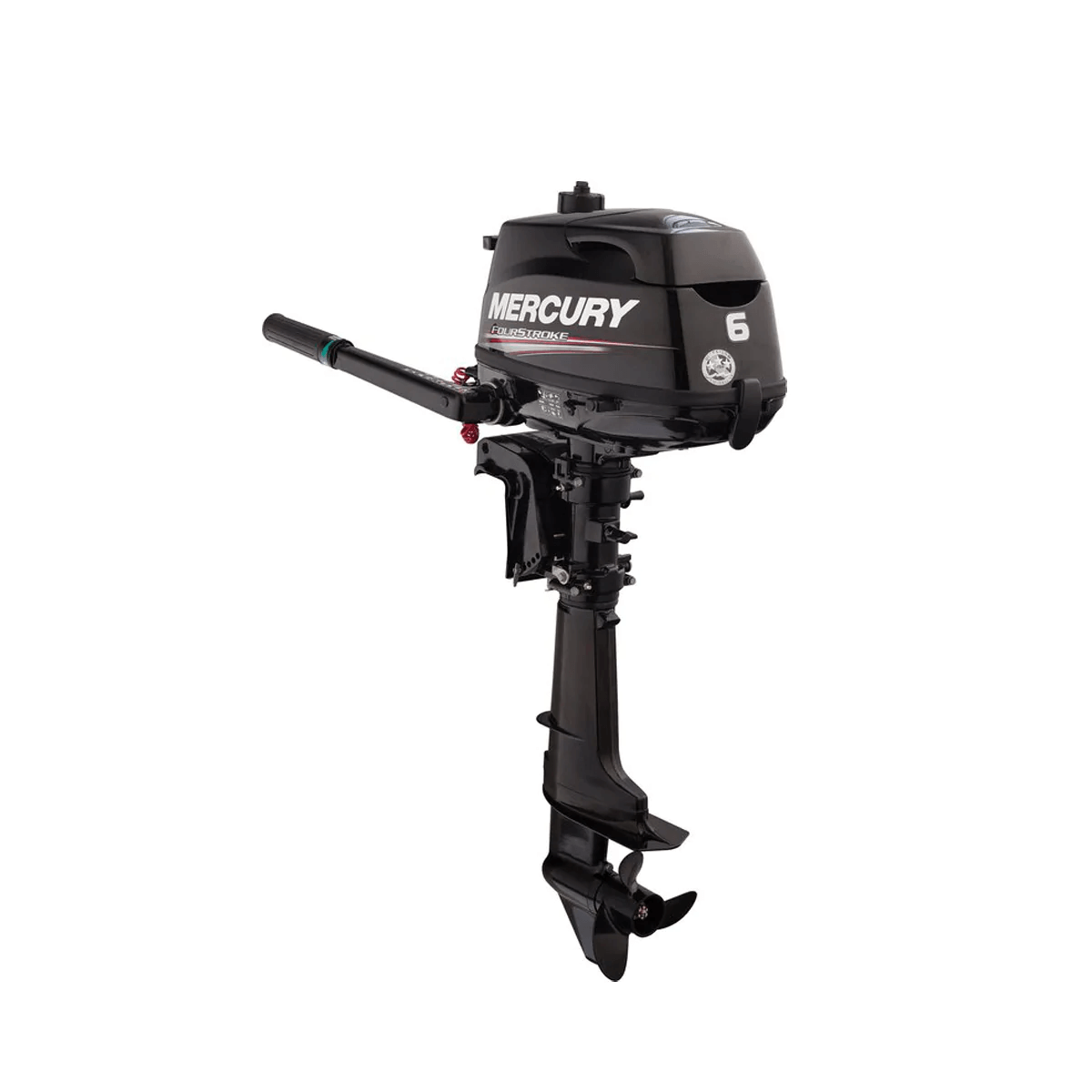
- Outboard: the whole package (engine, gearcase and prop) hangs off the transom as one unit. You steer by turning the entire motor.
- Sterndrive (also called inboard/outboard or I/O): the engine sits inside the boat near the stern, and a drive unit (the “outdrive”) passes through the transom. You steer by turning the drive.
- Inboard: the engine sits inside the hull and turns a shaft that runs through the bottom of the boat to the propeller. Steering is done with a separate rudder.
Most of the time, your boat already decides this for you. A hull built for an outboard has a transom made for it; a hull built for a sterndrive or inboard has an engine compartment, mounts and through-hull openings in specific places. Switching from one type to another is a much bigger job than swapping like for like, so start by asking what your boat was designed for.
Outboards
Outboards are the most common choice on small and mid-size boats, and they’re increasingly popular on bigger offshore boats too, often in twin or triple setups.
Why people like them:
- They free up space inside the boat, since there’s no engine box taking up the deck.
- You can tilt the whole motor up out of the water, which is handy for shallow water, trailering and keeping the lower unit out of saltwater when you’re docked.
- Access for routine service is usually easier, because everything is right there on the transom.
- Repowering is generally simpler: if your hull is rated for it, you’re mostly changing the motor, controls and rigging.
Things to keep in mind: the motor is out in the open on the back of the boat, and on some boats it can get in the way of a swim platform or fishing from the stern. Bigger outboards are heavy, so the weight on the transom matters.
We carry a wide range of outboard motors, from small portables like the Suzuki DF2.5 up to big offshore motors like the Yamaha F250 and Suzuki DF350A.
Sterndrives
A sterndrive is a bit of a hybrid. The engine lives inside, usually under a hatch at the back of the boat, and the drive outside works a lot like the lower half of an outboard. You’ll see them a lot on runabouts, bowriders and cruisers.
Why people like them:
- A clean transom, which leaves room for a full-width swim platform. That’s a big deal for families and watersports.
- The engine is tucked away inside, so the boat often looks and sounds a little more refined.
- The drive can still be trimmed and tilted, so you get some of the flexibility of an outboard.
Things to keep in mind: because the drive sits in the water and has seals, bellows and moving parts, it needs regular attention, especially in saltwater. Service access to the engine can be tighter than on an outboard. And when you repower, you’ll want to check whether your existing drive is compatible with the new engine or whether it should be replaced too.
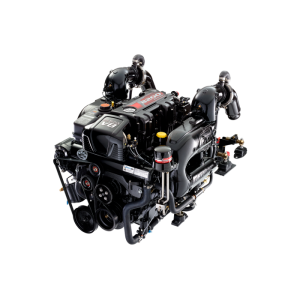
Take a look at our sterndrive engines, such as the MerCruiser 4.3 MPI, MerCruiser 4.5L and MerCruiser 6.2L, plus drives like the Bravo Three outdrive.
Inboards
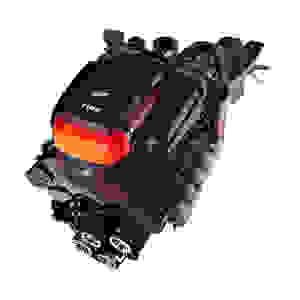
With an inboard, everything except the shaft, prop and rudder is inside the hull. They’re common on ski and wakeboard boats, sportfishing boats, trawlers, yachts and many work boats, and diesel inboards are a mainstay on larger vessels.
Why people like them:
- The weight sits low and toward the middle of the boat, which can help with balance and ride.
- Nothing hangs off the back, so the stern is completely clear.
- On ski and wake boats, an inboard setup puts the prop under the boat, away from riders at the back.
- Diesel inboards are a popular choice for boats that run long hours or carry heavy loads.
Things to keep in mind: you can’t tilt an inboard’s prop out of the water, so shallow water and trailering need more care. Shaft alignment, engine mounts and through-hull fittings all matter at installation. A repower is usually a bigger project, and it’s worth having a qualified marine installer look at the boat first.
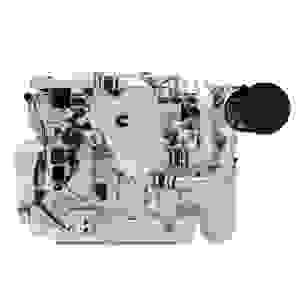
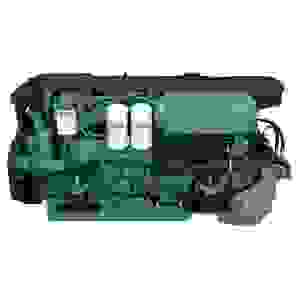
Browse our inboard engines, including the MerCruiser T6200, Volvo Penta D4-300 and Volvo Penta D6-370. For bigger boats, we also carry Caterpillar marine diesels like the Cat C12.
So which one is right for you?
A few questions usually point the way:
- What is the boat built for? This is the big one. Matching the original design is almost always the simplest and safest path.
- How will you use it? Fishing, shallow water and trailering lean toward outboards. Family cruising with a big swim platform often suits a sterndrive. Watersports, long-range cruising and heavy work boats often go inboard.
- Fresh or saltwater? Every type can work in saltwater, but think about how easy it will be to rinse, flush and keep the drive or lower unit out of the water.
- Who will service it? Ask what local mechanics are comfortable working on, and how easy parts are to get where you keep the boat.
- Repower or new build? On a repower, ask about controls, gauges, steering and whether the drive, shaft or prop needs to change too.
If you’re still deciding on power, our guides on choosing outboard horsepower and matching an outboard to your boat size are a good next read.
Not sure? Just ask
Send us your boat’s make, model, length and what’s in it now, and we’ll help you narrow it down. No pressure, just honest advice.
Get a quote | WhatsApp Sales | Call +1 (872) 293-4196 | Email Contact@allmarinemotors.com