“I’ve got a 17-foot boat, what motor should I get?” It’s one of the most common questions we get, and the honest answer is: it depends on more than the length. Two boats the same length can weigh very different amounts and be rated for very different power.
Still, boat size is a great place to start. Here’s how we think about it, from small tenders up to bigger offshore boats.
First, the numbers that actually decide it
Before looking at any engine, gather three things:
- The capacity plate. It shows the maximum horsepower and load your hull is rated for. Never go over it.
- Transom height. This sets the shaft length you need. Measure it before you order. A motor with the wrong shaft length won’t sit right in the water.
- Typical load. How many people, how much gear, how much fuel. A loaded boat needs more power to perform well.
Dinghies, tenders and small inflatables
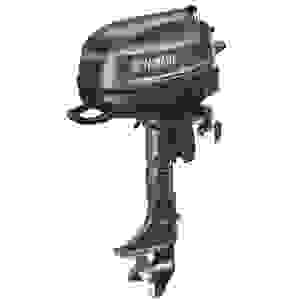
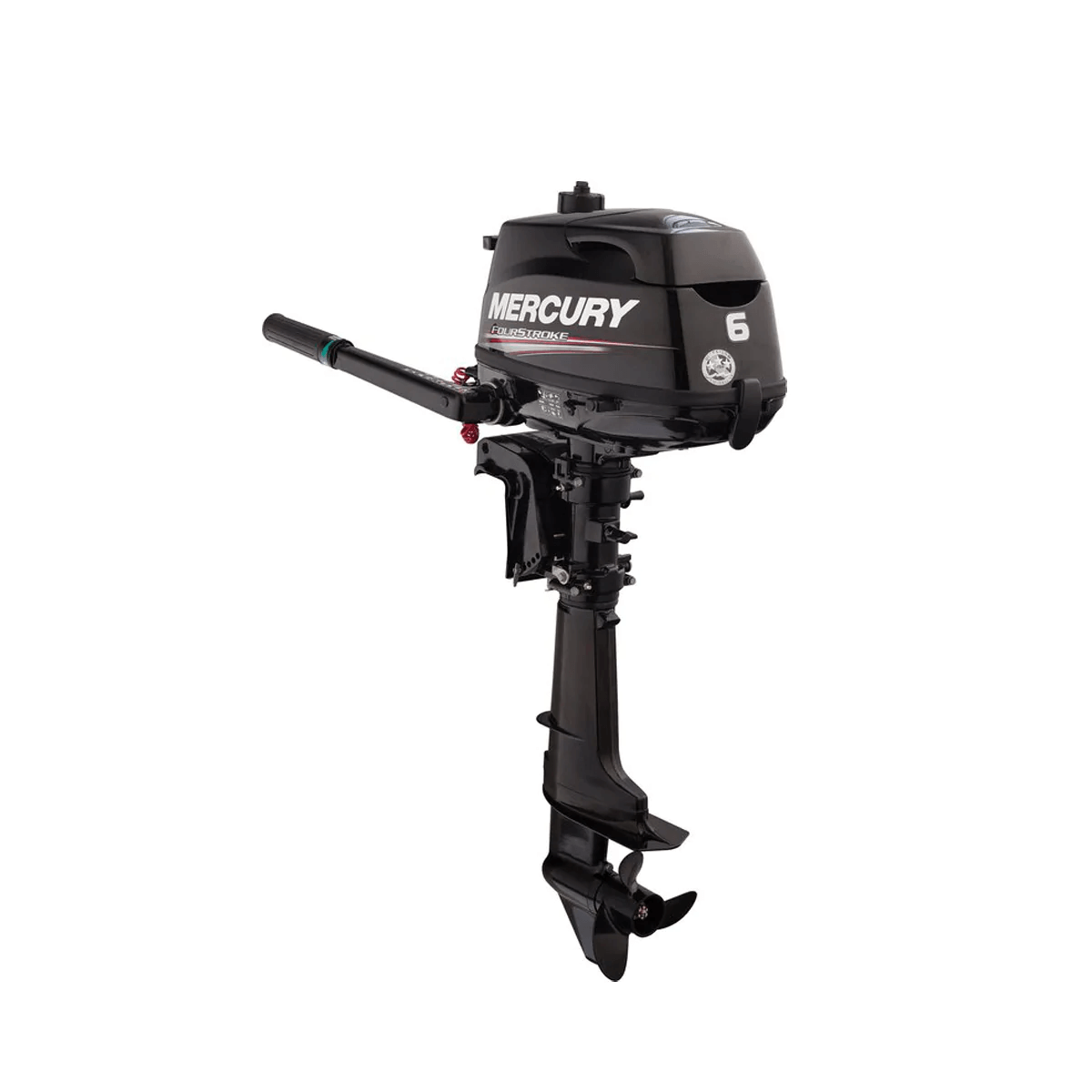
For a tender or small inflatable, you’re usually looking at a small portable tiller motor: light enough to carry and clamp on by hand. Weight matters as much as power here, because you’ll be lifting it. Check your inflatable’s max HP rating and pick something comfortably within it.
Options in this range include the Suzuki DF2.5, Yamaha F2.5, Yamaha F4 and Tohatsu 6HP.
Jon boats, skiffs and small fishing boats
Small aluminum boats and skiffs often run mid-size tiller motors. A tiller keeps things simple and saves space; remote steering is more comfortable on longer runs. If you plan to fish shallow water, it’s worth thinking about how the motor tilts and whether a jet outboard makes sense for your water.
Popular picks here include the Suzuki DF20A, Tohatsu 30HP, Suzuki DF40A and Mercury 50ELPT.
Family runabouts, pontoons and bay boats
Once you’re carrying a family, pulling a tuber or covering open water, you’re typically into remote-control motors in the mid-horsepower range. Pontoons in particular can be heavy once they’re loaded, so don’t size purely on length.
Look at the Yamaha F90, Suzuki DF115SS, Tohatsu MFS115, Suzuki DF140B and Mercury 150XL.
Larger center consoles and offshore boats
Bigger, heavier hulls that run offshore usually call for high-horsepower motors, and often twins. Two engines give you redundancy if one has a problem far from the dock, but they cost more upfront and to maintain. A single larger motor is simpler and lighter. Your hull’s rating and how far out you go will usually decide this one.
In this class we carry motors like the Suzuki DF200SS, Yamaha F250, Tohatsu BFT250D, Suzuki DF300AP and Suzuki DF350A.
A few more things to check
- Controls and rigging: repowering? Ask whether your existing controls, gauges and steering will work with the new motor.
- Engine weight: a heavier motor changes how the boat sits and trims. Compare against what you have now.
- Propeller: the right prop makes a big difference to performance.
Want to go deeper on power? Read how to choose outboard horsepower and our 4-stroke vs 2-stroke guide.
Send us your boat details
Tell us the make, model, length and what’s on your capacity plate, and we’ll suggest a few motors that fit. No pressure, just honest advice.
Get a quote | WhatsApp Sales | Call +1 (872) 293-4196